
The Ansel low profile TV stand brings the mid century mood to the media wall without the bulk of a full unit that eats the room. Its long, low case and warm walnut keep the room calm while hiding the gear you do not want on show.
If you are considering the Ansel low profile TV stand, here is what it brings to a modern living room that values calm over clutter.
Low and horizontal, the Ansel reads as furniture first and equipment holder second, which is the order a tidy media wall needs to feel right.
The screen becomes a guest in the room rather than the room’s reason for being, and the wood does the steady work of tying the wall together without a single loud note or a visible cable in sight.
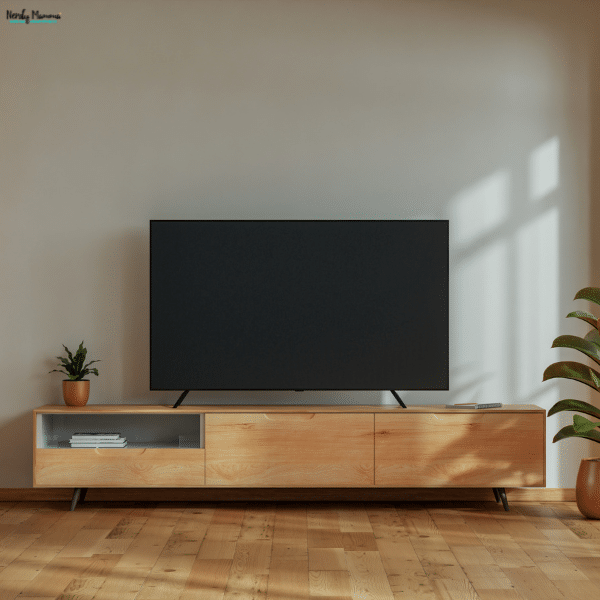
Low Line, Open Room
At a low height, the stand keeps the screen at a relaxed eye line and leaves wall space above for art or nothing at all, your choice entirely.
The horizontal shape balances a wide sofa and a wide room without adding visual weight that presses down on the space. In a small space, low furniture fools the eye into seeing more floor, which makes the room feel bigger than its square footage measured on paper.
Height control is the first gift of the piece, because a tall unit boxes the TV into a tower and kills the calm the style was built to protect with care. Measure the wall, then choose a width that spans most of it without touching the corners, and the room will feel planned rather than crammed with a block.
Warm Walnut, Honest Wood
The walnut finish carries the mid century warmth that black plastic cannot match, and the grain does the decorating for you without a single accessory added. You can skip the knickknacks and let the wood speak, because one good piece of walnut does more than a shelf of small objects you never use.
The tone pairs with cream walls and warm floors alike, sliding into almost any room without a fight or a repaint of the surrounding space. Touch the surface and you feel the difference between real wood and a printed sticker, which is the clear test of a stand built to last beyond the warranty period.
Storage That Stays Hidden
Behind the doors sit the box, the console, and the cable, out of sight and out of mind during dinner with guests who do not care. The adjustable light adds a soft glow that reads as ambience rather than gear, turning the interior into a feature instead of a closet you hide.
Choose what goes behind the front and keep the top clear for one or two items that earn the space by their looks. Hidden function is the point of a calm media wall, because the eye should rest on wood and light, not on a pile of remotes and tangled cords.
Cable and Cord Care
Rear channels and a tidy path keep cords from draping like vines down the back of the unit where they collect dust and catch the eye. Bundle with a tie and route the power strip inside a cubby so it is not on the floor where the vacuum finds it and you trip.
A five minute cord plan saves a year of eye strain every time you walk into the room and look at the wall with a sigh. The stand hides the gear; you hide the cords, because even the best cabinet cannot swallow a cable that was left to hang and drape.

Pair With the Room
The Ansel suits white, brick, or wood walls because its lines are clean and calm enough to defer to the room rather than dominate it with bulk. Add a low plant and a single art print above, and the look lands without a themed room built around a single piece you bought on impulse.
Avoid crowding the top with too many objects; the style reads best with empty space between the things you choose to show and keep.
Restraint is the whole point, and the stand does the heavy lifting so the rest of the wall can stay calm and uncluttered for once. Let the walnut lead, place one living accent nearby, and the media wall feels designed rather than assembled from a list of parts you found online.
Set it Up to Last
Place the stand on a level spot, check the wall fixings if it mounts, and dust the wood with a soft cloth rather than a wet rag that marks the grain for good. Keep drinks off the top to prevent rings, and use felt pads under any device you set up there on the surface.
A few minutes of care twice a year keeps the walnut looking new long after the warranty ends and the price is forgotten by everyone. Level feet stop the doors from swinging open on their own, a small annoyance that good setup prevents from the start with a simple turn.
Treat the wood as the furniture it is, and it will outlast the screen it was bought to hold through several upgrade cycles you will make.
Light and Ambience
The adjustable light is more than a gimmick; set low, it turns the stand into a soft source that takes the edge off a dark room during a film you rented for the night. Use it to highlight the walnut grain and the objects on top, rather than to light the whole space like a lamp you already own.
A dim glow behind the screen also reduces the harsh contrast that tires the eyes over a long evening of watching and snacking with the family. Play with the level until the wall feels calm instead of staged, because the light should serve the mood, not announce itself to the room with a bright flash.
Size and Wall Fit
Before you buy, measure the wall width and the items you plan to store, because a stand that spans the space reads as built in rather than dropped in by a delivery crew. Check the door swing and the path from the curb, since a long low case can still trip on a tight stair you forgot about in the excitement.
Leave a little clearance on each side so the piece breathes and the room stays open rather than boxed in by the furniture and the cables. Match the width to the sofa across the room so the two balance instead of one overwhelming the other with its mass and its presence.
| Feature | Benefit |
| Low height | Relaxed eye line, open wall |
| Walnut | Mid century warmth |
| Hidden storage | Gear out of sight |
| Adjustable light | Soft ambience |
| Care | Dust, level, pads |
The Ansel low profile TV stand proves a media wall can be calm and current at once, without a single compromise you notice later. Keep the line low, let the walnut set the tone, and hide the gear behind clean fronts that close with a soft click.
Tame the cords, pair with one plant and one print, care for the wood simply, and use the light for mood rather than task lighting. Your screen gets a base with as much thought as the picture it shows, and the room feels designed rather than assembled, which is the calm reward of choosing the right stand for the wall you live with.
