
Homeowners often discover sewer troubles after wastewater backs up, drains slow, or a wet area appears in the yard. Damage can still remain underground while roots, cracks, or shifted joints restrict flow.
A sewer scope inspection uses a camera to show the pipe’s interior before symptoms become urgent. That visual evidence gives homeowners and buyers a clear basis for repair decisions and helps prevent a defect from becoming an expensive disruption.
During a property purchase, a clear interior view can reveal conditions that a standard home inspection cannot assess. The camera records the line’s condition, location, and defects without excavation.
Buyers who schedule sewer scope inspections before closing can use the findings effectively during repair negotiations or budget planning. They can also make maintenance decisions based on evidence rather than a drain that simply works that day.
What the Camera Reveals
A camera inspection shows whether wastewater has a clear path through the private sewer lateral. The operator checks for tree-root intrusion, fractures, separated joints, bellied sections, heavy buildup, and foreign objects.
The recording also helps locate each defect by measuring its distance from an access point. That information distinguishes a localized repair from damage affecting a longer section.
Why Timing Matters
Small defects create larger problems as water, soil, and repeated use continue to stress a sewer line. Roots enter through small openings and expand as they grow. A separated joint allows soil to enter, which can create a void beneath a yard or driveway.
Grease and sediment narrow the passage until normal flow becomes unreliable. Early detection here gives a property owner time to plan repairs before a backup damages flooring, walls, or belongings.
What Happens During the Inspection
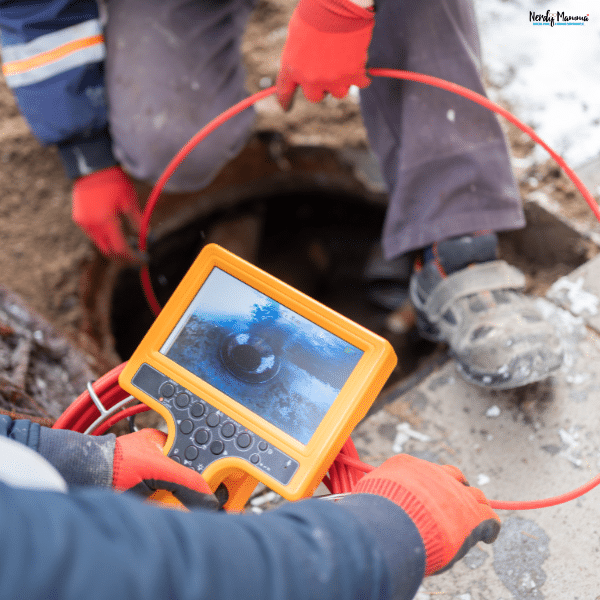
An inspector begins by locating an accessible cleanout or another entry point. A small camera travels through the line while a monitor displays the pipe’s interior.
The operator checks connections, pipe walls, flow conditions, and changes in alignment. A recorded video and written findings provide documentation for a buyer, seller, homeowner, or contractor.
Questions the Report Should Answer
Useful findings from the report identify the pipe material, the approximate defect location, and the severity of each problem. The report should explain whether roots, breaks, offsets, or buildup restrict flow.
It should also state whether the line reaches the municipal connection or stops before that point. Clear documentation helps a property owner compare repair options and obtain focused estimates.
Who Benefits From a Sewer Scope
- Home buyers gain information about an underground component that a visual inspection cannot assess.
- Sellers can address a documented issue before it delays a transaction.
- Homeowners benefit after recurring clogs, slow drains, sewage odors, or unexplained wet areas appear.
- Landlords and property managers gain a maintenance record for older buildings and properties with mature trees.

Signs That Warrant an Inspection
Recurring backups deserve investigation, especially when more than one fixture drains slowly. Gurgling toilets, sewage odors, and water rising in a shower during laundry all indicate restricted flow.
A soggy strip across a yard can indicate leakage or a damaged buried line. Fast-growing trees near the sewer route also increase the need for a camera review, even when indoor fixtures still function normally.
Using the Results Wisely
A sewer scope report does not replace a repair diagnosis, but it gives the next contractor a defined starting point. The property owner should ask where the defect lies, what caused it, and whether the camera reached the connection.
Repair choices depend on pipe material, access, depth, surrounding structures, and local requirements. A professional should explain whether cleaning, spot repair, lining, or excavation fits the documented condition.
Planning The Next Step
An inspection works best when access is clear and recent plumbing symptoms are documented beforehand. The owner should share drain locations, backup dates, cleanout details, and previous repair records with the inspector.
Afterward, the video should remain with the property documents. Future contractors can compare changes over time, confirm whether a repair solved the defect, and avoid unnecessary exploratory excavation.
Conclusion
A sewer scope inspection reveals the condition of a hidden pipe, allowing you to review it before it interrupts daily life. It can also affect a real estate transaction.
Buyers should schedule one during due diligence, while homeowners should consider one after recurring drainage symptoms or before major property work.
The next step is straightforward: arrange access to the sewer line, request a recorded inspection, and keep the findings with the property’s maintenance records.
