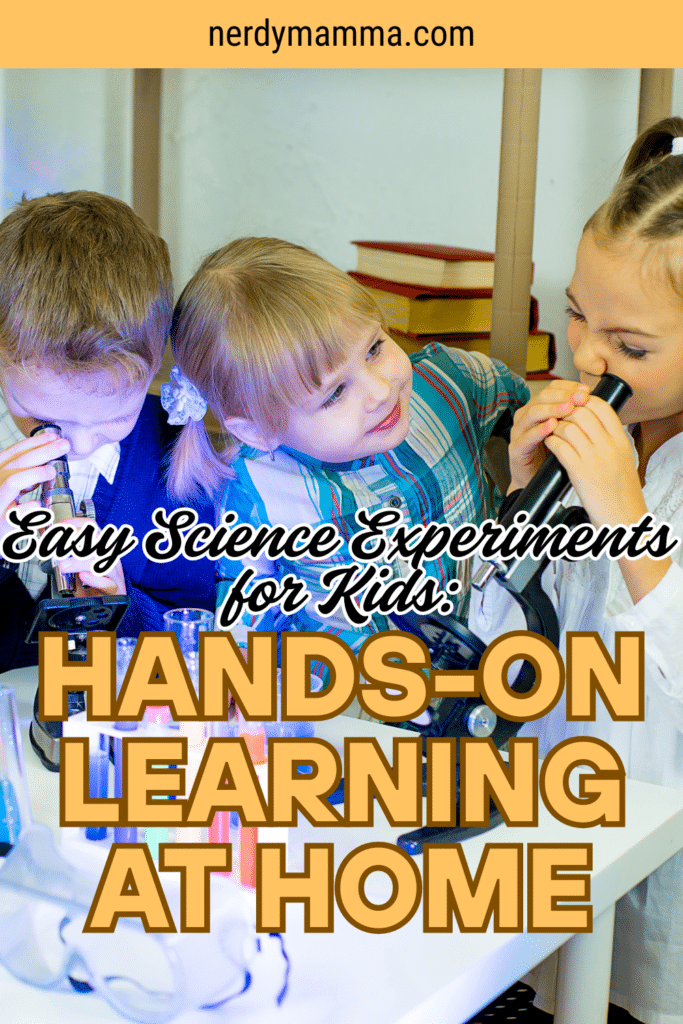
Children are curious and love adventures, which makes them the best explorers. It can be used to foster their natural interest through science experiments that spark curiosity and turn it into real learning.
In fact, it can be quite easy to develop an interest in children, and parents may need a couple of hours or even less to set up simple science experiments at home that may look like mere magic. The range of possible experiments may vary, but one thing remains unchanged: the wow moments, pure joy, and laughter.
Teachers will also find ideas that fit lessons for science experiments for students. For step-by-step planning tips, many parents rely on WritePaperForMe service and similar ones, which are handy hubs for clear instructions and printable worksheets.
Despite the final goal of experimenting, whether it is for fun or a last-minute science fair project, the following cool science experiments for kids may come in handy.

Safety First: Setting Up for Success
Before diving into any bubbling potion or flying balloon, a quick safety meeting keeps the day stress-free. Adults should clear a flat workspace, cover it with newspaper, and set out all materials in labeled cups or bowls.
Younger experimenters feel more confident when they can see everything in front of them. Eye protection is a wise idea even for kitchen science experiments, because baking soda sprays and vinegar splashes can sting little eyes.
A small bucket of warm water and a stack of towels handle spills in seconds, teaching good lab habits early on. Children can help draft simple rules, such as “never taste ingredients” and “wash hands after every activity.” Listing these guidelines on a poster reinforces reading skills while easing nerves.
Finally, remind everyone that failed trials are part of the process. If the balloon refuses to inflate or the flower stays white, that data matters too. Science grows through questions, mistakes, and fresh attempts.
Rainbow Milk: Kitchen Chemistry Magic
Few kitchen science experiments look as dazzling as Rainbow Milk. Children pour a shallow layer of whole milk into a plate and gently dot the surface with drops of food coloring. When a cotton swab dipped in dish soap touches one spot, the colors race away in swirling patterns.
The soap cuts the milk’s surface tension and breaks apart the fat molecules, creating motion that feels like a firework show. Because the materials – milk, soap, coloring – are common pantry staples, this activity doubles as one of the easiest science experiments with household items.
Preschoolers can practice naming colors, while elementary students can measure how temperature changes the speed of the swirl. To extend the investigation, young scientists can test different kinds of milk, from skim to almond, and record which mixture produces the boldest rings.
A short discussion on emulsifiers connects the rainbow to salad dressing, helping learners see chemistry in everyday meals.
Balloon Rockets: Physics in the Living Room
A roll of string, a drinking straw, and an inflated balloon are all that is needed to build a living-room rocket. Thread the straw onto the string, pull the line tight between two chairs, and tape the balloon to the straw before letting go.
As the escaping air shoots backward, the balloon glides forward, illustrating Newton’s Third Law in a playful way. This setup counts among the most fun science experiments for kids because they can race their rockets and tweak variables like balloon size or angle of flight.
Kindergarten classes may simply cheer for the fastest launch, while older students chart distance traveled and graph results. To deepen critical thinking, learners can attach paper clips as payloads, then predict how added mass changes acceleration.
Since every item in this project comes from a desk drawer or party box, it also demonstrates how diy science projects for kids do not require pricey kits—just imagination and basic tools.
Dancing Raisins: Carbon Dioxide at Work
A clear cup of soda water can become a tiny stage where raisins dance up and down. Children drop a handful of wrinkled fruit into the fizz and watch as bubbles cling to the rough surfaces.
When enough carbon dioxide gathers, each raisin floats upward; at the top, the bubbles pop, and the raisin sinks again. This cycle repeats until the drink goes flat. Because the supplies are easy to find, the demonstration qualifies as one of the cool science experiments for kids that even preschoolers can enjoy.
They can count how many trips a single raisin takes, building number sense alongside observation skills. Elementary learners might test different liquids—sparkling water, lemon soda, tonic—and track which produces the longest show.
By talking through gas density and buoyancy in simple language, adults can help children link the dancing fruit to submarines, hot-air balloons, and the bubbles that lift bread dough. Budget-friendly and quick, it wins every time.

Homemade Weather Station: Tracking the Sky
Turning a backyard into a weather station invites children to study Earth science over days instead of minutes. With a recycled jar, a ruler, and some tape, they craft a rain gauge to measure daily precipitation.
An index card, a straw, and a marble create a simple barometer that rises and falls with air pressure. Add a homemade wind vane from cardboard and a pencil, and data collection can begin. Because observations stretch across several weeks, this project resonates with science experiments for elementary students who are ready for longer investigations.
Younger siblings can still help color-code charts or empty the gauge. Families might set a specific question, such as “Does more rain fall on weekends?” then record numbers to test the idea.
Comparing personal results with the local forecast teaches students to evaluate multiple sources of evidence. Most importantly, the ritual of stepping outside at the same time each day builds patience, accuracy, and respect for nature’s patterns.
Color-Changing Flowers: Biology on the Windowsill
White carnations or celery stalks can reveal the hidden plumbing of plants with the help of food coloring. Children fill clear glasses with water tinted blue, red, or green, then trim the stems and place them inside.
After a night on the windowsill, colored streaks rise through the petals or leaves, proving that xylem tissues move water upward. This vivid display sits high on the list of science experiments for kindergarten because little hands can manage the pouring and cutting with light guidance.
Older learners can set up controlled tests by varying dye strength or room temperature, then calculate how fast each stem drinks. Discussing capillary action connects the activity to paper towels soaking spills, making the concept even clearer.
At the end, students might press the transformed petals in wax paper to create keepsake bookmarks, blending art with biology. A quick setup, dramatic results, and almost no mess make the flower test unforgettable.
Magnetic Treasure Hunt: Exploring Forces
An old refrigerator magnet, a paper bag, and a handful of mixed objects spark an indoor treasure hunt that introduces magnetism. Adults hide paper clips, coins, plastic beads, and aluminum foil bits around the room or bury them in a tray of rice.
Children sweep the magnet across surfaces, cheering when metal pieces cling to it. After each discovery, they sort items into “magnetic” and “non-magnetic” piles, creating a data table without even noticing.
The activity shows how simple science experiments at home can unpack complex ideas like invisible forces. For an extra twist, learners can wrap the magnet in layers of paper to test how far the field reaches. Recording the number of layers before attraction stops turns play into measurement.
Discussing why foil and coins respond differently highlights the role of iron. This hunt costs nothing, relies on science experiments with household items, and keeps kids moving, making it a classroom favorite on rainy days.
DIY Lava Lamp: Light and Density Show
A homemade lava lamp combines kitchen staples with a flashlight for hypnotic results. Fill a transparent bottle two-thirds full with vegetable oil, then pour in colored water until the container is almost topped off.
Because oil and water refuse to mix, the liquids layer neatly. When children drop an effervescent tablet into the mixture and shine a light through the side, glowing blobs rise and fall like molten lava. The tablet releases carbon dioxide gas that drags colored water upward; once the bubbles burst, the water sinks again.
This loop models density differences in Earth’s mantle while providing a dramatic centerpiece for family movie night. Learners can compare tablet sizes, water temperatures, or bottle shapes to design controlled trials.
As with many kitchen science experiments, cleanup is simple—just cap the bottle and store it for the next show. The mesmerizing lamp proves that household chemistry can be both educational and relaxing.
Wrapping Up: Encouraging Future Scientists
The best thing about experiments is that children begin to look at familiar objects in a different way. What is more, it is easier for parents and teachers now to encourage children to learn by showing them that scientific experiments can be conducted at home, not just in laboratories.
The natural curiosity inherent in every child can develop into a long-lasting hobby, and who knows, maybe one day it will become a professional activity. Despite the future outcomes, conducting experiments is an excellent opportunity to develop skills that are always valuable.