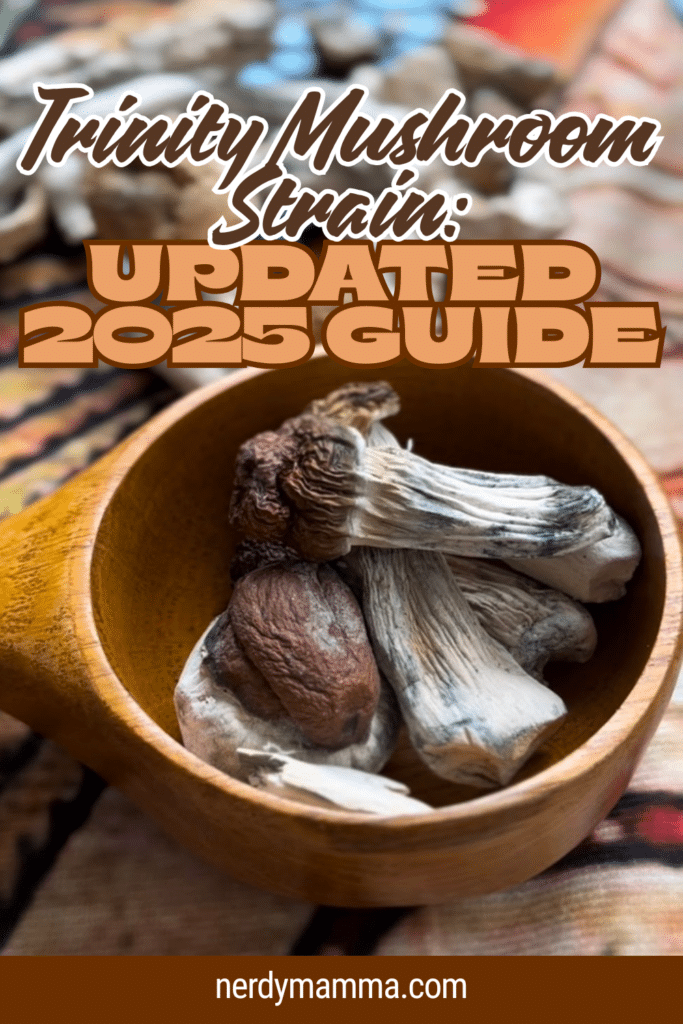
I first heard about Trinity mushrooms from this grower in Oregon who wouldn’t shut up about them. “These aren’t like anything else,” he kept saying while we were at a mushroom meetup. “I’ve been growing cubes for fifteen years, and Trinity is something special.”
Turned out he wasn’t exaggerating.
Trinity isn’t your typical cubensis that you find growing wild somewhere. This is lab-created stuff; the result of some seriously dedicated mushroom nerds who spent years crossing three different legendary strains to create something completely new. Think of it like breeding dogs, except with mushroom edibles and a lot more trial and error.
The name comes from the three parent strains they mixed together: Penis Envy (for the potency), True Albino Teacher (for reliable growing), and Aztec God (for the visuals). The result?
A mushroom that’ll knock you on your ass if you’re not careful, grows like a weed once you get the hang of it, and produces some of the cleanest visuals I’ve ever experienced.
But here’s the thing: Trinity isn’t for everyone. It’s strong. Really strong. I’ve seen people who thought they could handle anything get completely sideways on half their usual dose.
How Trinity Came to Be
Trinity showed up around 2019-2020 in the more serious growing communities. Unlike strains that someone just found growing in cow pastures, Trinity was deliberately created by crossing specific genetics. The whole process took years of selective breeding and testing.
The three parent strains each brought something to the table. Penis Envy contributed the crazy potency – that strain has been famous for being ridiculously strong since the 80s. True Albino Teacher added reliable growth patterns and contamination resistance. The Aztec God brought unique visual characteristics and some of the reported visual effects.
What’s interesting is that Trinity shows what growers call “hybrid vigor” – it’s actually better than any of its parent strains in most ways. Stronger than Penis Envy, easier to grow than True Albino Teacher, and more visually distinctive than Aztec God.
Potency and What to Expect
Trinity will mess you up if you’re not careful. I can’t stress this enough. The psilocybin content is significantly higher than your average cubensis, and the effects hit differently, too.
What People Actually Experience
I’ve talked to dozens of people who’ve tried Trinity, and certain patterns keep showing up in their reports. The visuals are consistently described as cleaner and more defined than other strong strains. Less visual “noise” and confusion, clearer geometric patterns, and enhanced colors.
One friend described it as “HD visuals” compared to other mushrooms. Another said it was like someone cleaned her mental windshield; everything just looked clearer and more vibrant.
The mental effects typically include:
- Intense euphoria in the first hour or two
- Deep personal insights that actually make sense later
- Creative thinking that goes in unexpected directions
- Spiritual experiences at higher doses (3g+)
- Strong connection to nature and universal concepts
The whole experience usually lasts 4-7 hours, depending on how much you take. The come-up is relatively smooth, and the comedown is gradual rather than abrupt. Many people report less nausea and body discomfort compared to other potent strains, though everyone’s different.
What Trinity Looks Like
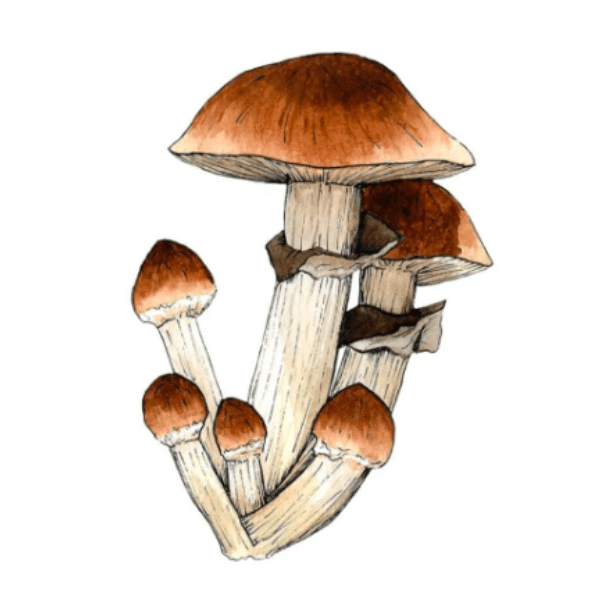
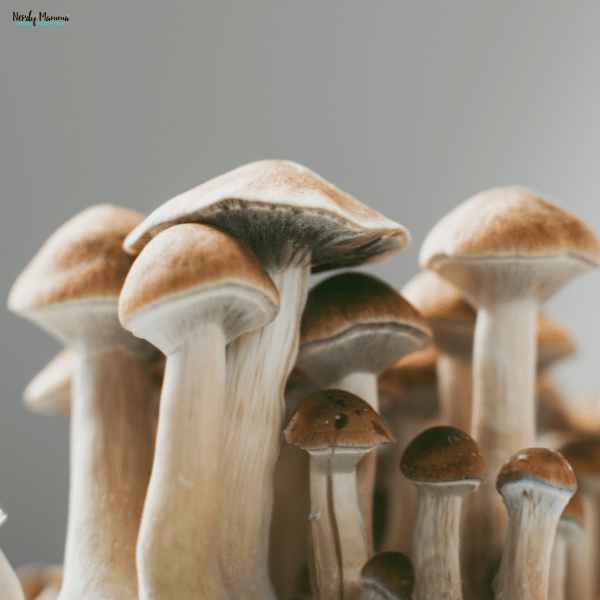
Trinity mushrooms are pretty distinctive once you know what to look for. The caps are usually medium to large (3-6 cm across when fully grown) with this beautiful caramel to golden-brown color that gets lighter toward the edges.
The stems are thick and sturdy, much more substantial than a lot of other varieties. When you handle them, they bruise blue like crazy; that’s the psilocybin oxidizing, and Trinity bruises more intensely than most strains. It’s actually a good sign that indicates high potency.
When they’re mature, the caps flatten out from their initial dome shape, sometimes with a little bump in the center. The gills start light gray and turn dark purple-black as the spores develop. The spore prints are the typical dark purple-brown you’d expect from any cubensis.
Dried Trinity mushrooms keep their distinctive cap color and often show even more intense blue coloration on the stems. If someone shows you dried mushrooms claiming they’re Trinity but there’s no blue bruising on the stems, they’re probably lying or mistaken.
Growing Trinity – What Works in 2025
Trinity is intermediate in difficulty to grow. The mycelium is robust and colonizes grain really well, but it has some quirks that make it trickier than beginner-friendly strains like Golden Teacher.
Getting the Environment Right
Temperature control is more critical with Trinity than with easier strains. During colonization, maintain a consistent temperature of 75-79°F. For fruiting, drop it to 72-75°F. Going outside these ranges can stall growth or reduce yields.
Humidity needs to stay between 90-95% during fruiting, but here’s the tricky part – Trinity is sensitive to direct water contact. Instead of misting the mushrooms directly, you need to mist the walls of your fruiting chamber and let the humidity build up naturally. Direct misting can cause bruising and stunted growth.
Fresh air exchange is important, but needs to be balanced with humidity. Too much airflow dries things out. Too little causes carbon dioxide buildup and weird, stretched-out mushrooms.
Substrate and Nutrition
Trinity grows well on standard CVG (coir, vermiculite, gypsum) substrate, but it really shines with nutrient additions. I’ve had excellent results adding coffee grounds, worm castings, or properly composted manure. The extra nutrition translates to bigger mushrooms and better yields.
The pH should be between 5.5 and 6.5. Trinity seems more sensitive to pH swings than some other strains, so testing and adjusting is worth the effort.
Timeline and Yields
From spore to harvest, Trinity follows this general timeline:
- Spores germinate in 3-7 days
- Complete grain colonization takes 10-14 days
- Bulk substrate colonization takes another 7-10 days
- Pins form 5-10 days after introducing fruiting conditions
- First harvest happens 5-7 days after pinning
Under good conditions, Trinity produces impressive yields – often 1.5-2+ dry grams per quart of spawn. That puts it among the more productive cubensis varieties.
You’ll typically get 3-4 good flushes before the substrate is exhausted. The first two flushes usually produce the largest and most potent mushrooms.
Dosage – Don’t Be a Hero
Cut your normal dose by about a quarter when trying Trinity for the first time. Seriously, don’t be a hero with this stuff. I’ve seen too many people have overwhelming experiences because they took their usual 3.5g dose and got way more than they bargained for.
Rough dosage guidelines for dried Trinity:
- Microdose: 0.05-0.1g (subtle mood enhancement, no visuals)
- Light: 0.5-1.0g (mild mood lift, slight perceptual changes)
- Moderate: 1.0-2.0g (clear psychedelic effects while staying functional)
- Strong: 2.0-3.0g (full psychedelic experience, significant perceptual changes)
- Intense: 3.0g+ (mystical territory, experienced users only)
Everyone reacts differently to psilocybin. Body weight, metabolism, medications, and individual brain chemistry all affect how you respond. Start low and work your way up over multiple sessions.

How to Take Trinity
The method of consumption affects both onset time and intensity:
- Tea preparation – Simmer ground mushrooms in water for 10-15 minutes, strain, and add honey or ginger. Faster onset, potentially less nausea, but the effects might not last as long.
- Lemon tek – Soak ground mushrooms in lemon juice for 15-20 minutes before consuming. This can intensify effects and speed up the onset, but it can also make the experience more intense than expected.
- Shroom Edibles – Options like shroom-infused chocolate bars and shroom gummies are also popular, or just straight chewing dried shrooms. This takes longer to take effect, but tends to produce a more gradual and manageable experience.
Set and Setting Matter More with Strong Strains
Trinity’s potency means preparation is even more important than with milder varieties. Make sure you’re in a comfortable, safe environment with a trusted person present, especially for higher doses. Clear your schedule for the day and the next day for processing the experience.
Have comfortable seating, good music ready, easy access to water, and anything else that helps you feel secure and relaxed.
Expert Insights
What Mycologists Say About Trinity
The mycological community has been particularly interested in Trinity for its genetic properties and cultivation characteristics. Dr. Alan Rockefeller, a respected mycologist specializing in psilocybin mushrooms, notes: “The Trinity strain is a remarkable example of intentional mushroom breeding, showcasing how careful genetic selection can produce a cubensis variety with unprecedented potency and consistency.”
His video guide, Active Mushrooms and Their Look-Alikes, offers invaluable insights into unique strains like Trinity, providing researchers and enthusiasts with a critical resource for understanding the complex landscape of psilocybin-containing fungi.
Common Questions
Can beginners grow this stuff?
Trinity isn’t the best choice for first-time growers. The humidity and air exchange requirements are more finicky than easier strains. Start with Golden Teacher or B+ to learn the basics, then move up to Trinity once you’ve got some successful grows under your belt.
How does Trinity compare to Penis Envy?
Trinity shares Penis Envy’s high potency but tends to produce more consistent results with better yields. Many people report cleaner visuals and less body discomfort with Trinity, though experiences vary. Trinity is also generally easier to grow than Penis Envy.
What substrates work best?
Trinity grows well on standard CVG, but adding nutrients really makes a difference. Coffee grounds, worm castings, or aged manure can significantly improve both yield and mushroom size. Just make sure any additions are properly pasteurized.