
Teaching children coding is now more accessible than ever, making happy parents who once thought the language of computers was a dream for university labs. There are various courses available at different levels, both online and offline.
However, some parents often wonder how to dive in without feeling overwhelmed by technicalities. Well, there are many options that turn such studies into a game; the whole process becomes a friendly adventure.
It became as easy as ordering papers from Speedypaper professionals. In the following minutes, this article will guide you through the best ways to teach kids coding, from selecting suitable classes to creating engaging coding games at home.
By the end, any caregiver or teacher will feel ready to select coding apps for kids, compare block coding platforms, and confidently teach kids to code in a relaxed, game-centered way that sparks creativity and problem-solving skills.

Why Early Exposure to Programming Matters
Researchers agree that the earlier children meet new symbols, the faster they turn those symbols into tools. The same pattern holds true for computer logic. The earlier kids start finding out about programming, the easier and more interesting it can be.
Naturally, programming for kids is not about memorizing syntax; it is more about developing a mindset and mathematical skills in common. Children who encounter small bugs learn to debug, a process that resembles scientific inquiry. It also helps develop critical thinking and problem-solving skills, which are essential at any age.
These habits of mind move smoothly into math, reading comprehension, and even sports strategy. Parents who start young also discover that kids view code as creative play rather than dull homework.
A blinking LED feels like magic, they control, not a worksheet they must finish. By linking problem-solving with fun, families lay a durable foundation that future coding classes for kids can build upon with ease.
Choosing the Right Coding Classes for Kids
There are dozens of coding classes available for children, and finding the best one can be tough. That is why it could be a great idea to take into account your kid’s personality, set goals, and schedule as well.
Younger students often thrive in small groups where instructors can sit beside them and celebrate each small success. Tweens, on the other hand, may prefer online classrooms that let them type real text-based code while chatting with friends. Accreditation matters, yet a warm instructor who speaks at a child’s level can be even more impactful.
Look for syllabi that mix block coding for kids with gradual introductions to typed languages such as Python. Classes that include storytelling, art, or game design tend to hold attention longer than pure number crunching.
Finally, ask whether the program offers progress reports and parent dashboards, so adults can cheer milestones. The right class should leave a child smiling and eager for the next challenge.
Learn Coding for Kids at Home: Getting Started
Families who cannot find a nearby club can still learn coding for kids right at the kitchen table. Begin with a shared goal, such as making a digital birthday card for Grandma or programming a micro:bit to display rolling dice.
Clear targets give every practice session purpose. One more important step is to develop a habit. It means that learning how to code should become a common and usual practice like brushing teeth. Select the time that will be a permanent time for coding, let’s say Saturday morning.
Many web platforms offer step-by-step tutorials for free. Spend this time with the child during the first few lessons and help them with their first steps if needed. Keep sessions short. Post finished projects on a family blog or message thread so relatives can applaud progress.
When enthusiasm dips, switch to coding games for kids or add a new robot to revive curiosity. With patience and playful goals, home study quickly blossoms into lasting skill.
Block Coding for Kids: Building Confidence Through Drag-and-Drop
Block coding for kids serves as the training wheels of the programming world. Instead of typing special symbols used in coding, children combine brightly colored blocks that represent logical parts of coding, such as loops, variables, and events.
The biggest advantage here is that visuals remove the fear of making some errors and make the whole process much easier for kids to perceive. Children also focus more on how to make everything work properly rather than looking for small and almost undetectable bugs that don’t give the opportunity to enjoy visible results.
When the on-screen astronaut forgets to collect a star, learners see an immediate cause-and-effect relationship and instinctively debug without knowing any code. Because the blocks translate to real JavaScript or Python behind the scenes, kids gain a subconscious familiarity with professional syntax.
Once confidence grows, the future transitioning into typed languages feels natural and easy. In short, block coding provides a sandbox where creativity, problem-solving, and systematic thinking grow side by side. Best of all, progress feels exactly like playtime.
If your child has already fallen in love with block coding and is ready for a bigger challenge, python coding for kids is the natural place to go next. Python reads almost like everyday English – “print,” “repeat,” “if this, then that” – so the jump from colorful drag-and-drop blocks to actual typed code rarely feels as scary as parents expect.
Bonus: it’s the same language behind YouTube recommendations and NASA data tools, which tends to impress even the most skeptical ten-year-old.
Coding Games for Kids: Turning Play into Learning
Video games already hold powerful sway over young attention spans, so why not harness that energy for education? Coding games for kids blend storytelling, puzzles, and friendly competition into lessons on loops, conditionals, and coordinates.
Popular titles let players drag code into a dungeon-crawling hero’s backpack or guide a racing car around math-rich tracks. Each level introduces a concept, then immediately requires the child to apply it to advance. The instant feedback loop keeps motivation high because success unlocks new characters, badges, or digital pets.
Parents can sit nearby and ask gentle questions such as, “What happens if we change the repeat value to five?” These prompts encourage children to articulate reasoning, deepening understanding. Many of these games run in a browser, lowering hardware barriers and making shared family play easy.
Over time, skills earned through gaming transfer smoothly into more formal projects and coding classes for kids, proving that play and learning can share the same joystick.
Coding Apps for Kids: Learning on the Go
Modern families juggle soccer practice, grocery trips, and homework, leaving little room for desktop lessons. Thankfully, coding apps for kids place engaging tutorials right in a pocket.
Whether waiting at a doctor’s office or during a road-trip rest stop, children can drag virtual code blocks, solve mini-puzzles, and upload projects to cloud accounts. Many apps sync progress across devices, so a child can begin a challenge on a tablet and finish it later on a smartphone.
Parents should scan app stores for features such as offline modes, built-in hints, and adjustable difficulty. Reviews that mention clear voice-overs and dyslexia-friendly fonts are also valuable. To keep screen time purposeful, set a weekly goal, let’s say, three completed challenges.
Then reward consistency with outdoor play or a new coding toy. By transforming idle minutes into productive micro-lessons, mobile platforms ensure that learning momentum never stalls, even during the busiest seasons. Some apps even link to home smart devices, letting kids turn lights on with a single line of code.
Coding Toys for Kids: Hands-On Exploration
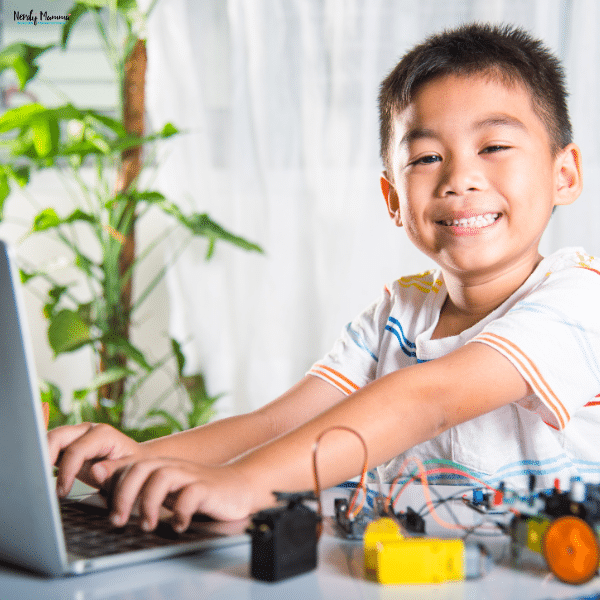
Not every lesson must happen on a screen. Coding toys for kids add a tangible dimension that sparks multiple senses at once. From rolling robots that respond to color-coded tracks to plush critters that light up when stitched circuits complete, physical gadgets make abstract ideas feel real.
Children program the movements by arranging magnetic tiles or scanning puzzle pieces, then watch the toy obey commands in the living room. This immediate feedback strengthens cause-and-effect understanding and invites trial-and-error experimentation without fear.
A good way here is to have a friend to work together. It will build their mutual interest when it comes to solving bugs that may happen. As for parents, they should check for durable materials and rechargeable batteries, ensuring longer playtime and less electronic waste.
When combined with online lessons, hands-on toys reinforce skills and reveal how digital instructions drive physical action, closing the loop between thought and reality for young makers everywhere.
Tips to Teach Kids to Code Without Stress
Even with vibrant tools, parents may worry about teaching the wrong way. A few simple habits can make the journey smooth. First, keep vocabulary light. Replace “algorithm” with “recipe” and “variable” with “labeled box.”
Second, chunk lessons into bite-sized challenges, each ending in a visible result such as a spinning sprite. Celebrate effort over perfection; a messy program that almost works deserves a high-five.
Third, model curiosity by saying “I don’t know, let’s find out” whenever a problem stumps the group. This shows children that experts Google, test, and revise too. Fourth, mix resources: alternate between coding apps for kids, block coding for kids platforms, and offline coding toys for kids to maintain novelty.
Finally, set realistic timelines. Building a first video game might take weeks, and that’s okay. By focusing on steady progress and shared discovery, adults teach kids to code in a supportive environment where confidence grows alongside skill.
Next Steps: Growing Beyond the Basics
The most interesting part starts when children learn the basics, as it opens a new world for them. a world of adventure. What parents can do is to encourage their kids to continue coding, especially when passion and interest grow.
In this case, minor problems that children may face are often overshadowed by new discoveries. It would be great if children could find their coding buddies to learn from each other, help each other, develop common interests, and share their achievements.
Later on, kids can find out more about various programs that help code even better. All these steps can lead to setting up a personal portfolio site to showcase finished projects. It can be another motivating milestone that may result in professional passion.
