It’s 8:45 p.m. The kids are finally asleep, the dishes are done, and you’ve got maybe twenty minutes before your own eyes give out. Scrolling your phone feels like a waste, but a big craft project feels like homework.
That’s the gap punch needle fills. You push a hollow needle through stretched fabric, and it leaves tidy loops of yarn behind, a bit like painting with thread. There’s no sewing machine, no mess, and no real learning curve.
This guide covers what it costs to start, what a good beginner kit looks like, and how to finish your first piece without wasting a dime.
Why Punch Needle Works for Busy Parents
Most crafts demand a block of free time and a clear table. Punch needle doesn’t. You can stop mid-row, set the hoop on the couch arm, and pick it back up tomorrow without losing your place.
The whole setup fits in a tote bag, which makes it a good match for soccer practice sidelines and doctor’s office waiting rooms.
The skill floor is low, too. If you’ve ever colored inside the lines, you can do this.
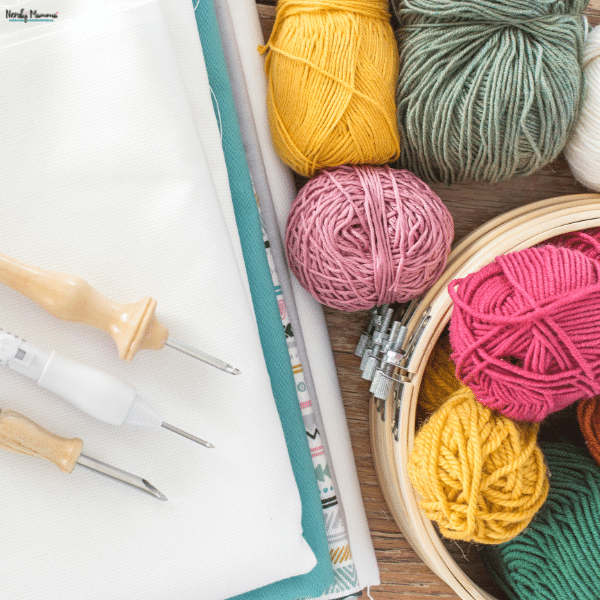
When you’d rather skip hunting for supplies, affordable punch needle kits for beginners bundle the pre-printed fabric, yarn, needle and hoop in one box, so you can start the same night the package arrives.
Here’s how it works. The needle pushes yarn down through the fabric, and the loops that form on the back become the fluffy, textured side once you flip the piece over.
Some people prefer the flat, stitched look of the front instead. Either is fine, and you can decide after you’ve seen both.
What a Starter Setup Really Costs
Craft hobbies have a reputation for quietly draining your bank account. Punch needle is easier on the wallet than most, but prices vary more than you’d expect. Based on current listings, here’s roughly what you’ll pay:
- Entry level, around $12 to $20. The DMC Learning Punch Needle Kit sits at about $18.69, and small Etsy starter kits can run closer to $12.
- Mid-range, around $40. Punchora’s Floral Series kit lists for about $39.95 and includes a larger design.
- Premium, around $59. Amy Oxford’s Yellow Star kit is priced near that mark and leans toward a more finished, gift-ready result.
Now the math nobody else seems to do. A beginner piece in the 6 to 8 inch range takes most people somewhere between six and ten hours, spread over a few evenings. That’s my estimate, not a lab measurement, and your speed will vary.
On a $40 kit, that works out to roughly $4 to $7 per hour of entertainment. A single movie ticket costs more for two hours. Buying the pieces separately rarely saves money either, since fabric, needle, hoop and yarn all carry minimum quantities.
If you’re still deciding whether this is your thing, the cheapest kit is a fine place to start. Our list of relaxing crafts to try this year can help you compare it with other low-cost options.
What to Look for in a Beginner Kit
Not every box labeled “beginner” earns the name. Check for these before you buy:
- Pre-printed pattern. Drawing your own design is a headache on the first try.
- Monk’s cloth, 100% cotton. Look for fabric with about 12 to 13 holes per inch, which holds loops firmly and doesn’t slip.
- A regular needle. A #10 is common for starters and works with standard yarn.
- A needle threader. Skip this and you’ll spend your first ten minutes threading.
- A hoop or frame. The fabric needs to stay drum-tight, so a hoop with a good grip matters.
- Clear instructions. Written steps plus a video are ideal, especially when you’re learning at night.
- Bold shapes. Tiny details frustrate beginners. Flowers, stars and big letters are far more forgiving.
One caveat: yarn quality varies a lot between kits, and cheap acrylic can split or fuzz. If you later want to buy your own, this guide on choosing the right yarn covers fiber basics that carry over well.

Your First Project, Step by Step
Set aside an hour for the first sitting. You won’t finish, but you’ll know whether you like it.
- Stretch the fabric. Pull it tight in the hoop until it sounds like a drum when you tap it. Loose fabric is the number one beginner problem.
- Thread the needle. Use the threader to pull the yarn through the needle’s handle and out of the tip, leaving a short tail.
- Start on an outline. Poke the needle in all the way until the handle touches the fabric, then drag it a short distance and repeat.
- Keep the needle low. Slide it along the surface instead of lifting it far off the fabric, or the loops pull out.
- Hold a steady stitch length. A consistent rhythm makes neat rows. Speed comes later.
- Fill the shape. Work the outline first, then fill the inside in tight rows.
- Check the back. Flip the hoop now and then to confirm the loops look even.
- Finish. Dab a little fabric glue on the back, let it dry, and trim any stray ends.
Three mistakes show up again and again. First, fabric that isn’t tight enough. Second, pulling the needle fully out of the cloth with each stitch, which tugs the previous loops loose.
Third, trimming too aggressively, which cuts into loops you wanted to keep. Go slowly, and you’ll avoid all three.
Why a Slow Craft Is Good for You (and Not Just Your Budget)
The calm you feel while punching isn’t just in your head, though the research comes with limits. An American Psychiatric Association poll found that 46% of Americans use creative activities to relieve stress or anxiety.
That’s self-reported, so it tells us what people do, not what the craft does to their brains.
A better test comes from a 2024 Anglia Ruskin University analysis of 7,182 UK adults.
Researchers found that people who crafted reported higher happiness and life satisfaction than those who didn’t, and the boost to a sense that life is worthwhile was comparable to being employed. It didn’t change loneliness, so don’t expect a hobby to replace friends.
The data is also observational. Crafting is linked to better wellbeing, and we can’t say it causes it.
Still, the practical logic holds up. Repetitive, hands-on work gives a busy mind a single thing to focus on. Mental Health America makes a similar case for hobbies, noting that regular downtime for something you enjoy supports your overall mental wellbeing.
For a parent running on fumes, twenty quiet minutes is worth more than most apps promise.
Making It a Family Habit
Punch needle doesn’t have to stay a solo activity. Older kids, roughly eight and up, can try it with chunky yarn and supervision, since the needle is sharp. Younger ones can pick colors, sort yarn, or draw simple shapes for you to follow later.
It turns a screen-free evening into something that feels like a shared project instead of a rule.
The finished pieces have a second life, too. A small framed flower makes a good teacher gift, a grandparent present, or a shelf decoration for a kid’s room.
If you like the idea of handmade items that carry meaning, these ideas on crafts that build family memories pair well with what you’ve made.
Conclusion
You don’t need a craft room, a big budget, or a free weekend to try punch needle. Spend $20 to $40 on a kit with a simple, bold design, and give it one quiet evening.
If the loops start to feel soothing, you’ve found a hobby that costs less per hour than almost anything else on your calendar. If not, you’ve lost the price of a takeout lunch and gained a nice piece of fabric for the scrap bin.
