
Getting a nursery ready is a little like putting together a puzzle: the crib, lighting, storage, and soft details all need to work together. Window coverings are part of that picture, too.
They can help manage bright morning light, add privacy, and make the room feel more comfortable for naps and bedtime. Thinking about the windows early can also help you plan the furniture layout and choose colors that feel right for the whole room.
Before choosing a style, notice how sunlight moves through the nursery. Does the room get direct sun in the morning or afternoon? Is there glare on the floor or furniture? Does street lighting come through the window at night?
These details can help you decide how much light control and privacy the room needs.

Think About Light at Nap Time
A nursery can be bright and cheerful during playtime, but strong sunlight may make naps harder. Consider how much light enters the room throughout the day and whether it falls directly on the crib, changing area, or favorite reading chair.
Adjustable window coverings let you respond as the light changes, so the room can feel bright during play and softer when it is time to rest.
If daytime sleep is a priority, you may want a room-darkening style that reduces incoming light. It can make the room dimmer, though no window covering should be expected to block every bit of light.
Light may still enter around the edges, depending on the window and installation. If you prefer a bright nursery, a light-filtering option can soften sunlight while keeping the room from feeling too dark.
For ideas on styles and colors that suit a baby’s room, explore nursery blinds. The right choice can complement the nursery’s colors while helping you manage light and privacy.
Choose a Style That Fits Your Routine
Think about how you’ll use the window every day. If you want to adjust light in small increments, horizontal blinds offer flexible control. You can tilt the slats to redirect sunlight or raise the blinds to open up the view.
If you prefer a softer, fabric look, shades can give the room a smooth, uncluttered appearance.
Consider what will be easiest during a busy day. You may be holding a baby, carrying laundry, or settling the room before bedtime, so simple operation can make a difference. The best style is one that feels convenient to adjust and works with the way you use the room.
The window itself matters, too. A wide window, a low sill, or furniture placed nearby can affect which style feels practical. Think about whether the covering will sit inside the window frame or outside it, and measure carefully before ordering. Accurate measurements help the finished treatment fit the opening and move as intended.
Keep Safety in Mind
In a baby’s room, safe installation matters as much as appearance. Keep cords, chains, and other operating parts well out of a child’s reach, and follow the manufacturer’s instructions for mounting and use.
Cordless designs can be a helpful option to consider for rooms used by young children.
Pay attention to the whole area around the window as your child grows. Keep the crib, changing table, and other furniture away from window coverings and their operating mechanisms.
Avoid placing toys or other tempting objects near the window if they could encourage a child to climb. Check the installation periodically to make sure the hardware remains secure.
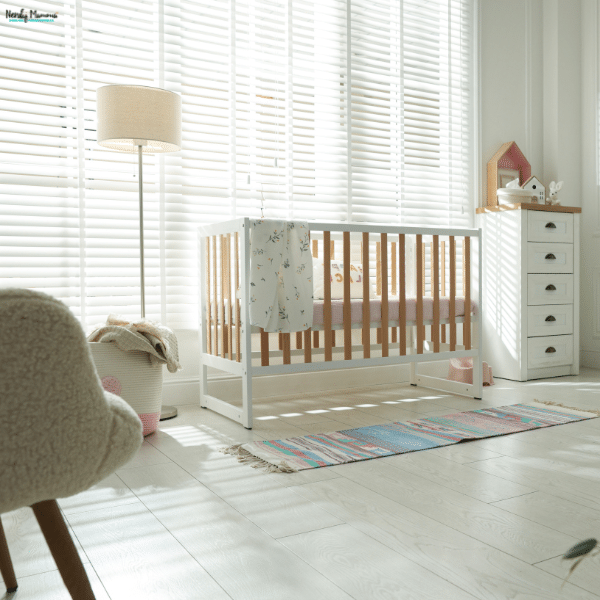
Make the Window Part of the Design
Window coverings can tie together the colors and textures already in the nursery. Neutral shades can work with changing décor, while a subtle color can add personality without making the room feel busy.
If the nursery has patterned wallpaper or bedding, a simpler window treatment may help balance the space.
You can also use the window treatment to support the feeling you want the room to have. Soft colors and clean lines can make a small room feel calm, while a contrasting shade can create a gentle focal point.
Consider how the fabric or finish looks in both daylight and lamplight, since colors may appear different throughout the day.
It can help to think beyond the first few months. A style that works for a nursery may still suit the room as your child grows, especially if you choose a versatile color and a straightforward design. That can make it easier to update the room with new bedding, artwork, or furniture later.
Plan for Privacy and Comfort
Privacy needs can vary depending on where the nursery is located. A window facing a nearby home, sidewalk, or street may call for more coverage than one overlooking a private yard.
Adjustable blinds and shades can help you find a comfortable balance between letting in daylight and limiting outside views.
Window coverings may also help soften the feeling of a room with strong sunlight or glare. They are one part of making the nursery comfortable, alongside the room’s temperature, lighting, and layout.
If the room gets particularly warm from direct sun, closing the covering during the brightest part of the day may reduce the amount of sunlight entering through the window.
Choose Materials That Are Easy to Maintain
Nurseries are busy spaces, and small messes are part of everyday life. Before choosing a material, check the care instructions and think about how easy it will be to dust or clean.
A simple surface may be easier to maintain than a highly textured one, especially if the window is near a changing area or gets frequent use.
Regular light cleaning can help keep the window area looking fresh. Follow the manufacturer’s care guidance, and avoid using cleaning products that could damage the finish or fabric.
Choosing a style that fits your cleaning routine can make the room easier to care for over time.
Plan for Everyday Use
Nurseries get a lot of use, so easy operation and simple upkeep are useful details to consider. Look for a window covering that you can adjust without disrupting the room, and check the care instructions before choosing a material.
A little planning can make the space more comfortable for daytime naps, evening routines, and all the busy moments in between.
Before making a final choice, compare the room’s light, privacy needs, window size, and décor.
Think about who will operate the covering and how often you expect to adjust it. Bringing these practical details together can help you choose a treatment that looks at home in the nursery and works well as part of your daily routine.
With a thoughtful balance of light control, privacy, safety, and style, the nursery window can become a practical part of a room that feels calm and welcoming for the whole family.
