
A ceiling fan takes the best spot in the room. It sits at the center of the ceiling, in full view from every chair. Most rooms get one because the summer air needs movement. The decorative fixture that would have gone in that spot moves aside.
Fan design has shifted over the past decade. Blade finishes, motor housings, and integrated light kits follow the same palettes as decorative fixtures.
Several lighting houses list fans beside their chandeliers; for instance, the luxury ceiling fans by Visual Comfort, where the metal finishes repeat across the catalog. The sections below cover the points to settle before a fan goes up.
Old Builder Fans Set the Reputation
Builder-grade fans shaped the general opinion of the category. Five white blades on a white housing. A bowl light in frosted glass at the base. A pull chain on each side. Those fans still hang in millions of bedrooms.
Current models read differently at the ceiling. Two or three blades appear on many designs. Housings come in aged brass, matte black, and bronze. Blades show up in walnut veneer as well as painted wood.
A fan drawn from a lighting range can sit under a beamed ceiling with no visual clash.
Blade Span Follows the Room Square Footage
Room size sets the blade span before the style question comes up. ENERGY STAR guidance matches a span of 29 to 36 inches to rooms up to 75 square feet. Rooms from 76 to 144 square feet suit a span of 36 to 42 inches.
A 44-inch fan covers rooms up to 225 square feet. Rooms from 225 to 400 square feet call for a span of 50 to 54 inches, with the 52-inch model the most common size on the market.
A great room past 400 square feet sometimes takes two fans spaced along the ceiling. Rooms longer than 18 feet fall into that group as well. A single fan at the midpoint leaves the far end of such a room with still air.
Mount Height Decides the Comfort of the Room
Height carries equal weight with span. Federal guidance puts the blades at least 7 feet above the floor, with 18 inches of clearance from the walls. A position 8 to 9 feet above the floor gives the strongest airflow in a room with the height for it.
Standard mounts arrive with a downrod of 3 to 5 inches, which suits a 9-foot ceiling. Downrods run out to 120 inches for a 20-foot ceiling. An 8-foot ceiling calls for a flush mount, sold in some catalogs as a hugger fan.
Hugger models sit tight to the ceiling, which limits the air they move. A sloped mount handles a vaulted ceiling.

Six Checks Before a Fan Order
Checks worth a minute include:
- Blade span matched to the room square footage
- Damp or wet rating listed for a porch or a bathroom
- Downrod length supplied inside the box
- Finish match with the light fixtures in the same sightline
- Control type offered for the fan: wall plate or handheld
- Light kit included with the housing
Ratings deserve a close look for any outdoor spot. A UL damp rating covers a bathroom or a humid interior space. A UL wet rating covers a position exposed to rain, with a sealed motor plus all-weather blades.
Signs a Room Calls for a Fan
Several signs point toward a fan. A bedroom that holds heat at the ceiling through the night needs air movement.
A room with windows on one wall gets little cross breeze. A covered porch used through the summer suits a wet-rated model. A dated fan with a wobble at high speed has reached the end of its service.
One warm afternoon rarely justifies the work. A room that stays uncomfortable across a full season makes the case, especially ahead of a repaint. A ceiling already open for a remodel brings the fan into the same labor window.
An Electrician Checks the Ceiling Brace First
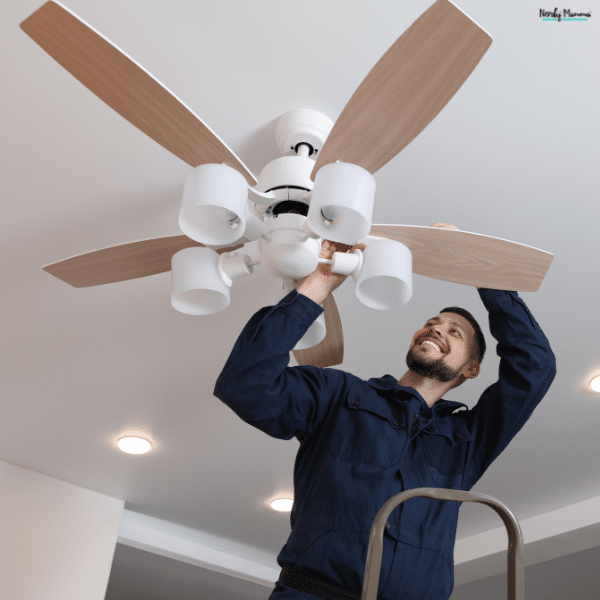
A fan puts a moving load on the ceiling. A standard light box rarely carries that load. A licensed electrician confirms a fan-rated box with a brace set between the joists.
The visit starts at the existing box. The electrician reads the rating stamped on it, then fits a brace where the rating falls short. Blade clearance gets measured against the wall distance.
Fan speed controls get wired separately from any light dimmer, since a dimmer on a fan motor can damage it. Households get the fan hung plus balanced in one appointment. A test run at high speed catches a wobble while the electrician remains on site.
A ceiling fan occupies the most visible spot in the room. Span, mount height, and moisture rating determine how well it serves the space. Lighting houses list fan ranges beside their fixtures, such as the luxury ceiling fans by Visual Comfort, where the finishes repeat across the catalog.
A square footage measurement comes first, with the finish choice after it. An electrician confirms the ceiling support before the order arrives. Households that size the fan correctly keep the air moving with no cost to the look overhead.
