
If you are travelling to the USA, then staying connected will make the entire trip much easier. You will be able to order an Uber from the airport, message family back home, pull up directions when you need them, and book a table at a restaurant. All without having to hunt around for Wi-Fi.
But what’s the easiest way to get mobile data in the United States?
For most Australian travellers, the choice comes down to an eSIM or a physical SIM card. Both can get you online. However, where they differ is in terms of setup, convenience and cost.
Let’s take a look at how they compare.
What’s the Difference Between a USA eSIM and a Physical SIM?
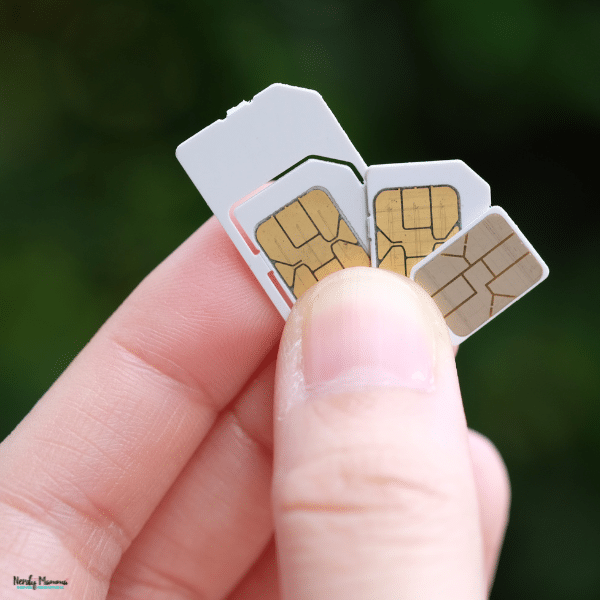
The main difference is pretty simple. A physical SIM is the small plastic card you put inside your phone. An eSIM is already built into compatible devices.
With a physical SIM, you’ll need to buy the card and insert it into your phone, which can be a little tricky. An eSIM, on the other hand, works digitally. So, there’s nothing to physically swap.
Both can connect you to mobile networks in the USA. It’s really the way you buy, install and manage them that differs.
How Does an eSIM Work?
If your phone supports eSIM technology, you can usually buy a plan online and install it before you leave Australia.
Setup often involves scanning a QR code or following the provider’s installation instructions. You can then switch the eSIM on when you arrive in the United States.
Notably, there’s no need to visit a phone shop or remove the SIM card you already use at home.
How Does a Physical SIM Work?
A physical SIM works in the more familiar way. You buy a SIM card. Open the SIM tray on your phone. Then replace your Australian SIM with the new one.
You can buy physical SIMs from mobile phone stores and other retailers in the USA. The downside is that you may struggle to find somewhere that sells the right SIM after you arrive.
Additionally, you’ll also need somewhere safe to keep your Australian SIM until it’s time to put it back in.
Why Are More Travellers Choosing a USA travel eSIM?
One of the main reasons travellers are choosing a USA travel eSIM over a physical one is convenience. Indeed, after spending 15+ or more hours flying from Australia, the last thing many travellers want to do is search an airport for a SIM card or find a phone shop in an unfamiliar city.
However, with an eSIM, you can sort out your data before leaving home. Therefore, once you land, you can simply switch it on and start using maps, messaging apps, and rideshare services as needed.
This functionality can be particularly handy if you’re arriving late at night or heading straight from the airport to your accommodation.
Another major benefit is that you don’t have to remove your Australian SIM. In fact, on compatible Dual SIM phones, you can keep your usual number active while using the eSIM for mobile data.

When Could a Physical SIM Still Be the Better Choice?
Despite their benefits, eSIMs aren’t necessarily right for everyone. If, for instance, you have an older smartphone that doesn’t support eSIM technology, then you’ll need a physical SIM.
A physical SIM may also suit travellers who intend to stay in the USA for several months and want a local mobile plan with a US phone number, calls, texts and data.
Additionally, some people simply prefer buying their mobile service in person. If you are the type of person who would rather speak to someone in a store and have them help with setup, then a physical SIM could feel more comfortable.
Which Phones Can Use a USA eSIM?
The great thing about eSIMs is that most newer premium smartphones support them. This includes brands such as the most recent iPhone, Samsung Galaxy, and Google Pixel models.
However, you should not assume that yours does. Instead, check your phone manufacturer’s specifications before buying a plan. It’s also important to check whether your phone is unlocked.
If it is not, then a carrier-locked phone may prevent you from using another provider’s SIM or eSIM overseas.
Is a USA eSIM Cheaper Than Buying a Physical SIM?
A USA eSIM is often cheaper than purchasing a physical SIM card. However, price shouldn’t be the only thing you compare.
The amount you’ll pay depends on a range of factors, including the provider, how much data you need and how long you’re staying. A traveller visiting New York for five days, for example, will have very different needs from someone road-tripping across the USA for two months.
For this reason, before committing to one or the other, it’s worth thinking about how you’ll actually use your phone. If your hotel has Wi-Fi and you mainly need data for maps and messages, then a smaller plan could be enough.
However, if you’re regularly streaming videos or using your phone as a hotspot, then you’ll probably need more data.
So, Should You Choose a USA eSIM or a Physical SIM?
For most Australian travellers with a compatible phone, an eSIM is likely to be the easier choice.
To start with, you can buy your plan before leaving Australia. On top of that, you can also keep your existing SIM in your phone and avoid spending a large part of your first day in America looking for a SIM card.
That said, having a physical SIMs still make sense if your phone doesn’t support eSIMs or if you’re planning on staying in the country for an extended period.
Ultimately, whichever option you choose, it’s a good idea to sort it out before you travel if you can. The same goes for your travel insurance.
