My dishwasher started leaving white film on everything about two years ago.
Glasses came out cloudy. The inside of the machine had this chalky residue building up around the spray arms. I cleaned it with vinegar, it came back. Cleaned it again, came back faster.
I assumed it was a dishwasher problem. Ran cleaning cycles, tried different detergent pods, checked the filter. Nothing changed.
Then I started noticing the same white crust around the bathroom faucets. The showerhead was getting coated too. And my hair felt different after washing — kind of flat and coated, like there was a film that the conditioner was not quite getting through.
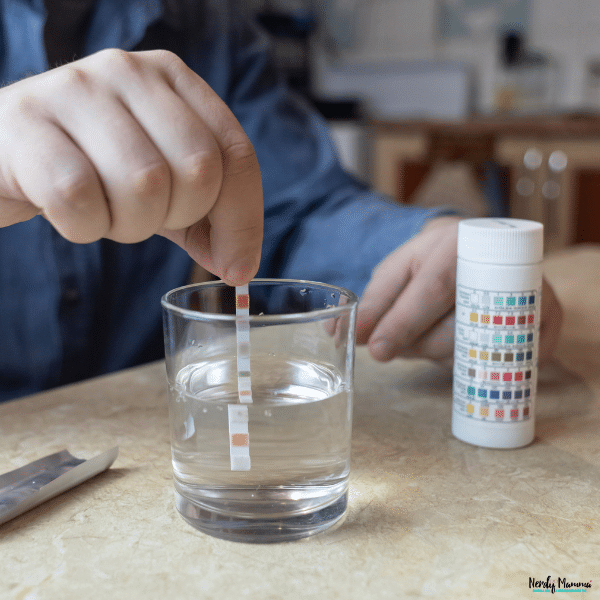
I finally bought a cheap water test strip from the hardware store.
The hardness reading came back at the top of the scale.
What Hard Water Actually Is
Once I started looking into it I went pretty deep pretty fast. That is kind of my thing.
Hard water is water with a high concentration of dissolved minerals — mostly calcium and magnesium. It is not a health risk. Those minerals are naturally present in groundwater and they get absorbed as water moves through rock and soil on its way to the water table or reservoir.
The problem is what they do once they are inside your house.
When hard water heats up or evaporates it leaves those minerals behind as deposits. That is the white film on the glasses. The crust around the faucet. The buildup inside the water heater that makes it work harder and cost more to run.
The measurement is in grains per gallon, or GPG. Anything above 7 GPG is considered hard. Above 10 GPG is very hard. Above 14 GPG and you are dealing with the kind of hardness that noticeably shortens appliance lifespan and drives up energy costs over time.
My strip test put me somewhere in the moderate to hard range. I wanted a real number so I ordered a proper digital tester.
While I was looking into what those numbers actually meant for my home I came across Quality Water Lab’s hard water testing results, which showed residential water hardness at 18 grains per gallon dropping to 1.6 after softening — the kind of before and after number that actually tells you something useful.
Calcium down 93 percent. Magnesium down 92 percent.
That context made everything else I was seeing around the house make a lot more sense.
The Home Tests I Ran
While I was waiting for the digital tester to arrive I started running some informal experiments around the house. This is the nerdy part.
The Soap Lather Test
Hard water interferes with soap and detergent because the minerals react with the soap molecules and reduce their ability to lather. I filled two identical glasses — one with tap water, one with distilled water from the store. Added the same amount of dish soap to each and shook them.
The distilled water produced a thick foam almost immediately. The tap water produced almost nothing. Just slightly cloudy water with a thin layer of weak bubbles on top.
That explained a lot about why I was using so much more detergent than the packaging suggested.
The Faucet Deposit Test
I picked the bathroom faucet with the heaviest buildup and soaked a paper towel in white vinegar, wrapped it around the base of the faucet, and left it for an hour. The deposit came off in chunks.
Calcium and magnesium deposits are alkaline, vinegar is acidic, and the reaction dissolves them. The fact that it dissolved that fast confirmed the deposits were mineral-based not soap scum.
The TDS Meter Reading
When my digital tester arrived I got a reading of 340 parts per million total dissolved solids from the kitchen tap. That confirmed what the strip test suggested — significant mineral content in the water supply.

The Two Main Options
After all that research I had narrowed it down to two approaches.
Salt-based ion exchange is the traditional water softener. It works by passing water through a resin bed where calcium and magnesium ions get swapped out for sodium ions.
The result is genuinely soft water — minerals actually removed, not just changed. These systems require salt refills and regeneration cycles where the resin gets recharged with brine. They are the most effective option for moderate to severe hardness.
Salt-free conditioners do not remove the minerals. Instead they use a process called template assisted crystallization to change the structure of the calcium and magnesium molecules so they are less likely to stick to surfaces and form scale.
The minerals are still in the water but they pass through without depositing. No salt, no drain line, no regeneration cycle. Lower maintenance but not technically softening in the traditional sense.
For households with moderate hardness and city water the salt-free option works well. For higher hardness levels or well water with iron content the salt-based system is almost always the better fit.
My water has iron in it. Salt-based went on the list.
What I Looked for Before Buying
A few things I wish someone had told me upfront:
- Test your water properly before buying anything. A $20 digital hardness tester gives you a real GPG number. That number determines what grain capacity you need. Buying too small means the system cannot keep up with your household’s water use between regeneration cycles.
- Flow rate matters more than most buyers realize. A softener rated for 8.5 GPM installed in a house where three showers run simultaneously will cause noticeable pressure drop. Check the GPM rating against your household’s peak demand.
- The grain capacity is not the only sizing factor. If your water has elevated iron content that affects how quickly the resin gets loaded up. Iron competes with calcium and magnesium for resin sites, which means a system sized only for hardness may need to regenerate more frequently than expected on well water with iron.
- Salt-based systems need a drain line. The regeneration cycle flushes the brine out through a drain. If your install location does not have easy access to a floor drain or laundry standpipe that complicates the install.
What Changed After Installing
The dishwasher film went away within a week. Completely.
Glasses come out clear. The spray arms are clean. I stopped running cleaning cycles entirely because there is nothing to clean.
The showerhead buildup stopped. The bathroom faucets stay clean between wipes instead of crusting up again within days.
The soap lather test I ran at the beginning is almost embarrassing now. I use about a third of the dish soap I was going through before.
The hair situation improved too. That coated flat feeling after washing is gone. Same shampoo and conditioner, noticeably different result.
The water heater is running shorter cycles. I cannot put an exact dollar figure on the energy savings yet but the change in cycle frequency is noticeable.
For a household where hard water was quietly affecting appliances, cleaning results, and daily quality of life the fix turned out to be more straightforward than two years of vinegar cleaning cycles and detergent experiments suggested.