
The treadmill specification that most directly determines how often a home treadmill gets used isn’t the one that features most prominently in purchase comparisons.
Maximum speed, motor horsepower, and incline range are the variables that drive most buying decisions, and they’re the variables with the least relationship to the usage frequency that determines whether a treadmill for homes produces the fitness outcomes that justified the purchase.
A treadmill you use four times a week at a moderate speed delivers more benefits over a year than a faster model you use only twice a week because excessive noise limits when and where you can use it.
The noise variable sits outside most purchase evaluations and inside most usage pattern conversations among people who have owned more than one home treadmill.
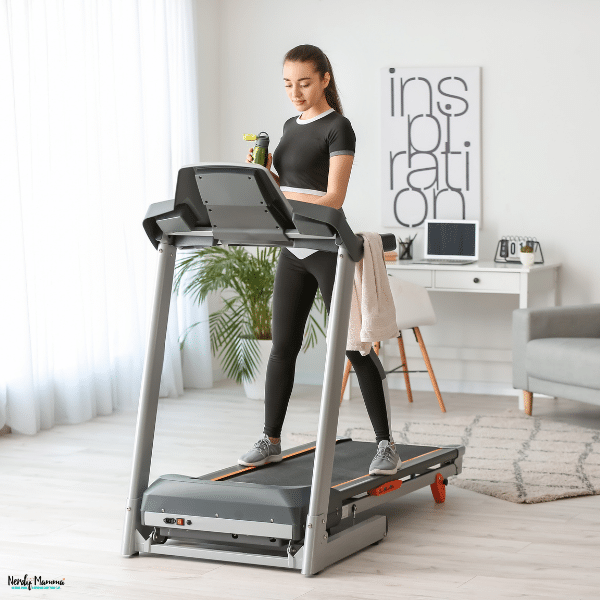
What Noise Actually Constrains in a Home Environment
A treadmill that generates significant noise under load isn’t just a machine that makes sound. It’s a machine whose operation creates a household impact that places implicit boundaries around when it can be used without affecting other people in the space.
An early morning session before the household wakes, an evening run after children are in bed, a midday workout in an apartment building where noise travels through the floor, all of these sessions either happen on a quiet treadmill or don’t happen at all on a loud one.
The skipped sessions accumulate differently from the sessions that happen. If noise would wake your sleeping partner at 5:30 a.m., you’ll likely skip your workout. Most people never make up that missed session because their schedule doesn’t allow another convenient time.
It simply doesn’t happen, and across weeks of the same pattern, the treadmill’s effective usage frequency drops to whatever the household’s noise-permissive windows allow rather than what the owner’s fitness intentions require.
Where the Noise Originates and Why It Varies Between Machines
Treadmill noise has two primary sources that interact in ways that make total noise output a product of both rather than either alone.
Motor noise is the electrical and mechanical sound the drive system generates under load, and it varies with motor quality, mounting isolation, and how efficiently the motor converts electrical input to belt movement.
Belt and deck noise is the impact and friction sound generated by footfall on the running surface, and it varies with deck cushioning, belt thickness, and the mechanical fit between the belt and the deck surface.
A machine that reduces both sources of noise provides a quiet running experience, so you can use it at home without disrupting your household.
One that addresses motor noise but not belt noise, or vice versa, produces a noise profile that’s better in one dimension and still problematic in the other, and the problematic dimension is the one that creates the usage constraint.

What Consistent Use Produces That Occasional High-Intensity Use Doesn’t
A home treadmill used consistently at moderate intensity produces cardiovascular and metabolic adaptations that accumulate across weeks and months in ways that irregular high-intensity use doesn’t replicate.
The consistency is the variable that produces the adaptation, and the noise level is the variable that determines whether consistency is achievable in the actual household context where the treadmill lives.
This relationship between noise, consistency, and outcome is the one that experienced home treadmill owners understand and first-time buyers typically don’t, because first-time buyers are evaluating capability and experienced owners are evaluating usability.
Capability is what the machine can do at its limits. A treadmill’s usability depends on how easily it fits into your daily life. If you prioritize features over usability, you’ll likely use those features far less often.
How Noise Level Interacts With Placement Options
A quieter treadmill fits in more areas of your home, giving you greater flexibility. This flexibility makes workouts easier to access and reduces disruption to your household.
A treadmill in a dedicated home gym space with sound isolation is a different noise management situation from one in a bedroom, a living area, or a space adjacent to a sleeping child’s room.
The machine that’s quiet enough to operate in the available space produces daily accessibility. A treadmill that needs a dedicated, isolated space disrupts the household and gets used only when that space is available. In most homes, that happens less often than expected.
