
A toddler learning to ride is rarely a neat little milestone with a bow on it. It’s more like a series of small negotiations with gravity. One day the child refuses to sit on the seat. The next day they “just want to walk with it.”
Then, out of nowhere, they glide for two seconds and look genuinely surprised by their own competence.
That’s the point where a simple setup matters. A properly sized starter bike, like a 12-inch balance bike, isn’t about skipping steps or rushing toward pedals. It’s about giving a toddler a way to practice the scary part of cycling without feeling trapped by it.
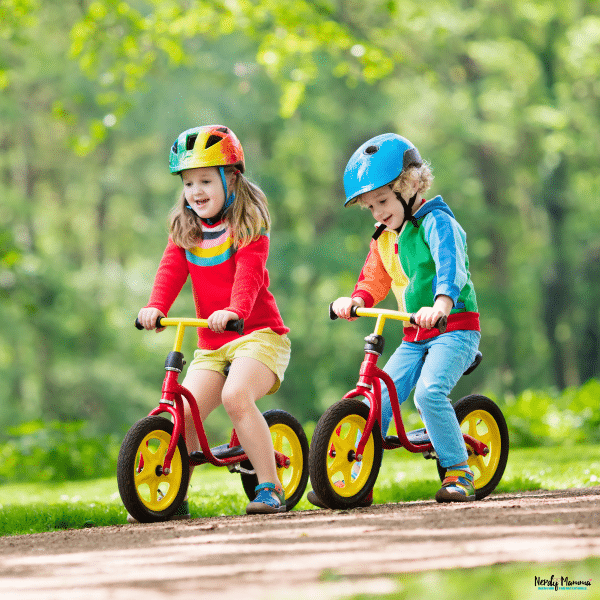
The Real Obstacle is Not Pedaling
Adults tend to describe bike learning as a mechanical challenge. Can the child pedal? Can they steer? Can they brake?
Toddlers experience it differently. For them, the big question is: what happens when the bike starts to tip?
On a pedal bike, that tipping feeling can arrive early and often. The feet are up. The bike is taller. The child is trying to coordinate circular pedaling while also keeping the front wheel straight. It’s a lot.
A balance bike removes the panic factor. Feet stay close to the ground, so “bail out” is always available. That alone changes a child’s posture. Shoulders drop. Arms loosen. The face stops looking so serious. And once the body is relaxed, learning accelerates.
Confidence, in other words, shows up as softness. Not bravado.
Confidence is Built Through Repeatable Wins
Toddlers do not build confidence because someone says “You’ve got this.” They build it because the same action works twice, then five times, then twenty. Push and roll. Lean and turn. Foot down and stop.
Balance bikes are good at producing repeatable wins because they simplify the feedback loop. The toddler is in charge of speed. The toddler is in charge of stopping. The toddler can test a new move and recover without adult hands grabbing the handlebars.
It’s also why the best balance bike sessions often look boring from a distance. There’s no big “first ride.” Just a child quietly collecting proof that they can handle the situation.
What Balance Bikes Teach That Training Wheels Often Don’t
Training wheels look like the obvious choice because they keep the bike upright. For many families, they also seem familiar. That’s what plenty of people grew up with.
The problem is that training wheels can create a false sense of stability. The child learns to lean, then the wheel catches them. Turning can feel jerky. The bike behaves like a three or four-wheeled contraption, not like a two-wheeler.
When the training wheels come off, the child has to learn balance from scratch anyway, except now they’re higher off the ground and often more aware of “failing.”
Balance bikes skip the detour. They teach the real sensation of two-wheel riding, just at toddler scale.
The Sneaky Skill: Comfort With Momentum
A child on a balance bike learns quickly that momentum steadies the ride. Going too slowly can feel wobbly. Gliding feels smooth. That’s a lesson that helps later, because many beginner pedal-bike falls happen when kids slow down, stiffen up, and overcorrect the steering.
A balance bike gives them a memory of what stable motion feels like. It’s hard to overstate how helpful that is.
Fit and Setup: Where Confidence Can Be Won or Lost in One Afternoon
A lot of “my toddler hates the bike” moments are actually “this bike doesn’t fit” moments.
The simplest rule is also the most important: the child should be able to sit on the seat with feet flat on the ground and knees slightly bent. Flat feet, not tiptoes. Tiptoes make kids tense, and tense kids don’t glide.
Weight matters too. A heavy bike feels like a stubborn object. A lighter bike feels like something the child can control, especially when turning or recovering from a wobble.
Here’s a quick setup checklist that tends to prevent the usual frustration:
- Seat low enough for flat feet while seated
- Handlebars within easy reach (no shrugged shoulders)
- Grips that feel secure, not slick
- Tires that match the riding surface the child actually uses most days
- A frame the child can step over without catching a leg
If a toddler is awkwardly wide-stepping or constantly standing up to “walk” the bike, it’s worth adjusting the seat before assuming the child is not ready.

The Confidence Stages Parents Usually See (With All the Messy Bits)
Balance bike progress is rarely linear. Toddlers have off days. They get distracted. They decide the bike is boring for a week. Then they come back and ride like they’ve been practicing in secret.
Still, most children cycle through a few recognizable phases.
Stage 1: The Seated Shuffle
This is the slow “walking while sitting” phase. It can look like nothing is happening. Plenty is happening. The child is learning steering, weight shift, and basic control with minimal risk.
Stage 2: The Accidental Glide
It usually happens when nobody is making a big deal out of it. The toddler gives one slightly stronger push, the feet lift without thinking, and the bike rolls on for a clean second or two.
There’s often a brief pause in their expression, that split-second “wait, what?” look, followed by a grin and an immediate demand to try again.
That accidental glide matters because it’s the first time balance stops being an adult instruction and turns into a personal discovery. The child doesn’t hear “keep your balance” and attempt it.
They feel balance working, and that feeling is what they chase from that point on.
Stage 3: Gliding Becomes the Game
Now the child starts lifting feet on purpose. Push, float, feet down, repeat. It looks like play because it is play. It’s also skill repetition in disguise, which is exactly how toddlers learn best.
Stage 4: Turning While Gliding
Straight-line coasting is one thing. Turning while coasting is where real riding shows up. The child starts to lean naturally into gentle turns and corrects without stiff panic.
A toddler who can glide and turn is usually closer to pedaling readiness than many parents expect.
How Adults Accidentally Dent Confidence (Even With Good Intentions)
There’s a certain adult urge to “help” the learning process along. Sometimes that help is the problem.
Common confidence killers include:
- Holding the bike constantly so the child never learns micro-corrections
- Narrating every second (“Steer this way, feet up, look ahead”) until the child freezes
- Turning rides into practice sessions instead of letting them be normal play
- Picking a tough surface too early, like thick grass that makes the bike feel heavy and slow
- Comparing progress to another child, even casually
Toddlers are sensitive to pressure. If the bike starts to feel like a test, a lot of kids simply opt out.
A good rule is simple: less coaching, more chances.
Making Balance Bike Time Actually Useful (Without Turning it Into Homework)
Balance bikes work because they invite experimentation. The most effective sessions tend to be short, frequent, and low stakes.
A few practical ideas that usually help:
Choose a Friendly Riding Spot
Flat pavement in a quiet area is often the easiest place to learn. Grass can seem safer, but it adds resistance and can make the child feel like the bike is “hard.” Smooth surfaces let toddlers experience gliding sooner, which is where confidence grows.
Let the Child Set the Speed
Speed comes naturally once the child trusts stopping. Pushing a nervous toddler to go faster often backfires. When the child chooses speed, posture relaxes and balance improves.
Keep Sessions Short Enough to End on a Win
Ten minutes that ends with a proud grin beats forty minutes that ends with a meltdown. Confidence has a memory.

When to Switch to a Pedal Bike (and When to Wait)
Age is a rough guide at best. Readiness shows up in behavior.
A toddler is often ready to try pedals when most of these are true:
- Gliding for several seconds with feet up
- Turning smoothly without wild over-steering
- Starting and stopping with intention
- Showing curiosity about pedal bikes rather than avoidance
Curiosity matters. A child who is interested will tolerate the awkward early attempts. A child who is not interested will interpret every wobble as confirmation that biking is not for them.
The Pedal Transition: Keep it Calm, Keep it Familiar
The best pedal-bike transitions are almost anticlimactic. The child already knows how to balance, steer, and manage speed. Now they’re just adding a new motion.
The tricky part is starting. Many kids can ride once moving, but struggle to get going. That’s normal. It’s also where patient, low-pressure repetition helps.
A practical approach:
- Start in the same kind of flat space the child already likes
- Practice short starts rather than long rides
- Let the child stop often without turning it into a problem
- Keep adult hands off the handlebars unless safety requires it
If balance is already solid, pedaling usually clicks faster than people expect. Not always instantly. But faster.
Safety That Supports Confidence
Helmet, every time. No drama, no scary speeches. Just routine.
Shoes matter too. Early balance bike riders use their feet constantly for control and braking. Closed-toe shoes with decent grip make riding feel more secure.
After that, safety is mostly about the environment. Quiet paths. Clear sightlines. Avoiding steep slopes until the child has real stopping control. Those choices reduce the “big scary moment” that can linger in a toddler’s mind.
What Balance Bikes Really Give a Toddler
Pedal bikes get all the attention, sure, but that’s not the real story. The real story is independence, the kind toddlers can actually feel in their bodies.
A balance bike lets a child move through a neighborhood path or a park loop on their own terms, then fix the little errors that come with it. A wobble, a quick foot down, back on track. No adult swooping in, no panic, no big production.
That routine builds a specific kind of confidence. Not the loud, performative kind. Practical confidence. It shows up when a child takes the same corner a touch faster than yesterday, realizes it worked, and tries it again because it’s fun.
So when the pedal bike finally enters the picture, the child isn’t arriving as a beginner. They’re arriving with familiarity. Two wheels already feel normal. Wobbles register as information, not emergencies.
A fall, if it happens, is annoying but not world-ending. That mindset matters, because it’s exactly what makes the next step possible.
